
Last updated October 16, 2026
 Wrought iron
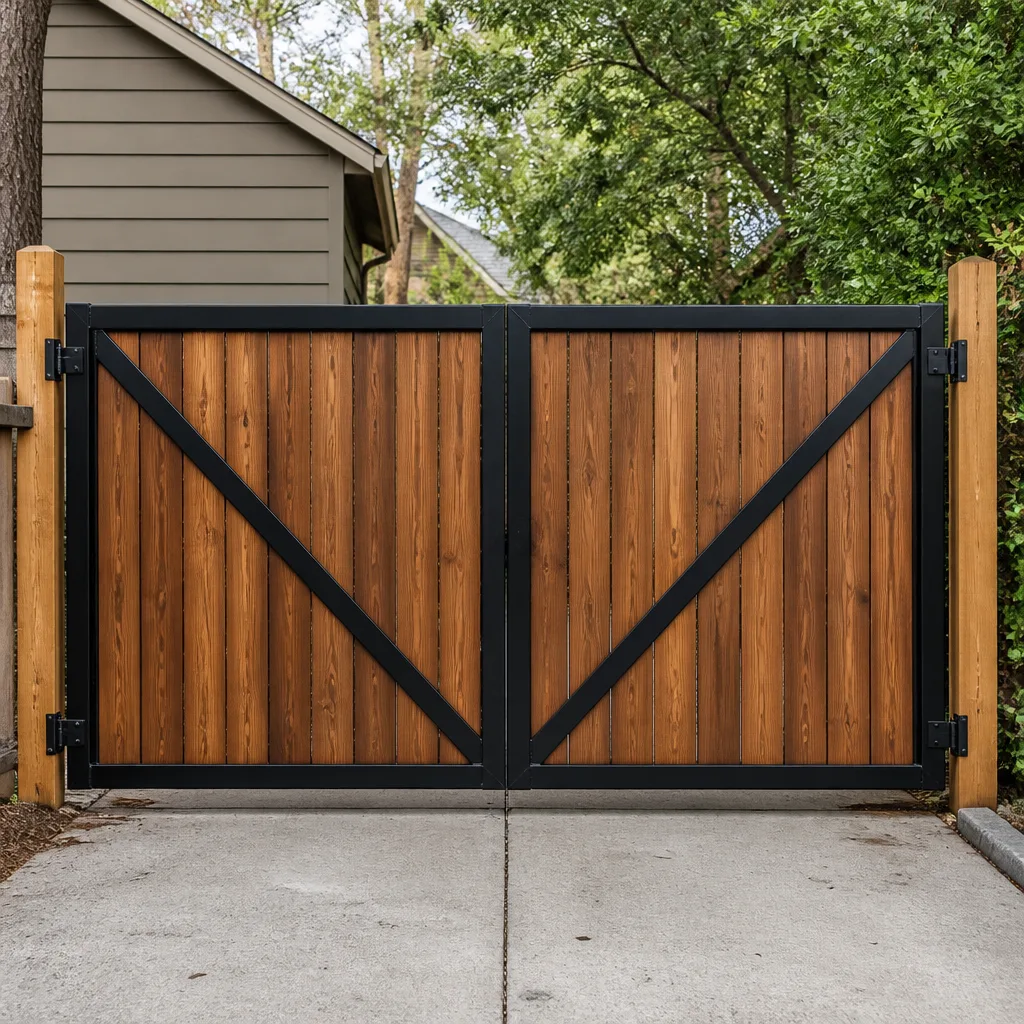 Wood & steel frame
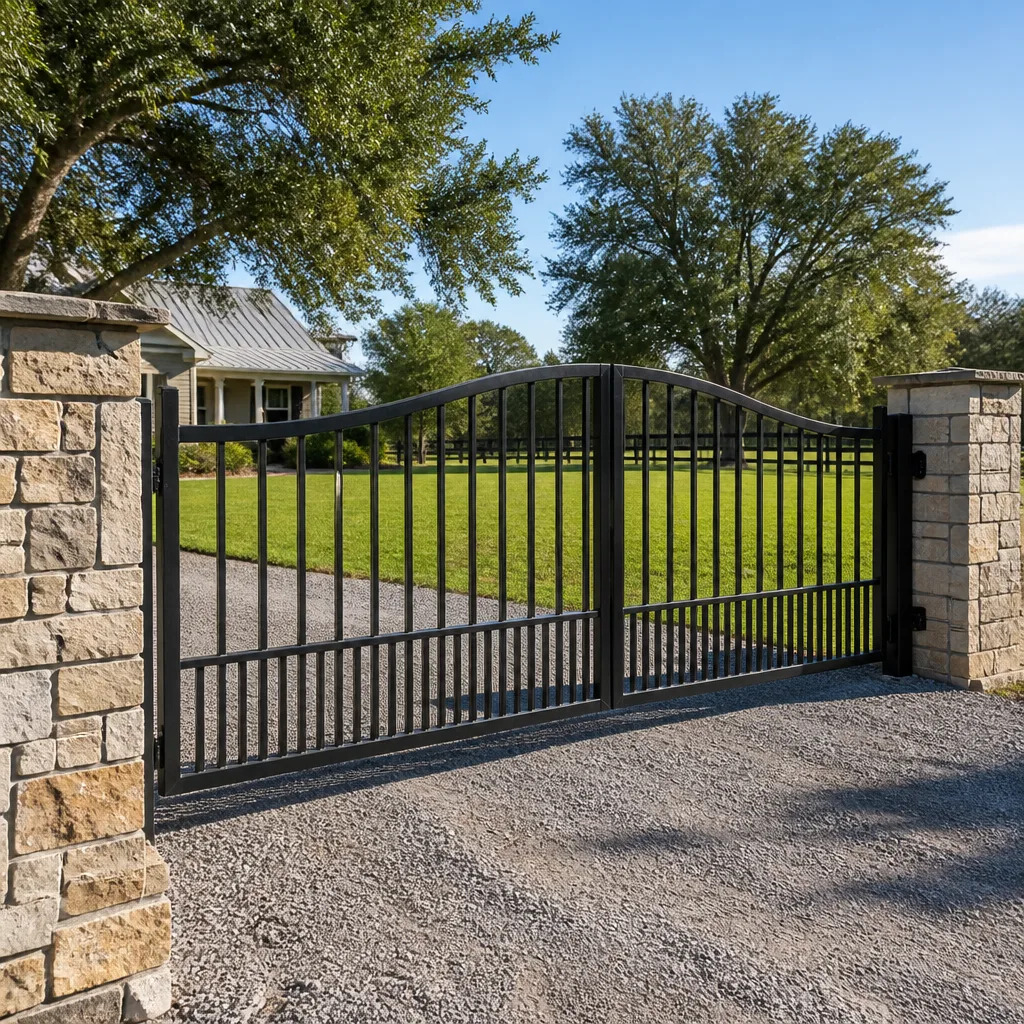 Farm & ranch
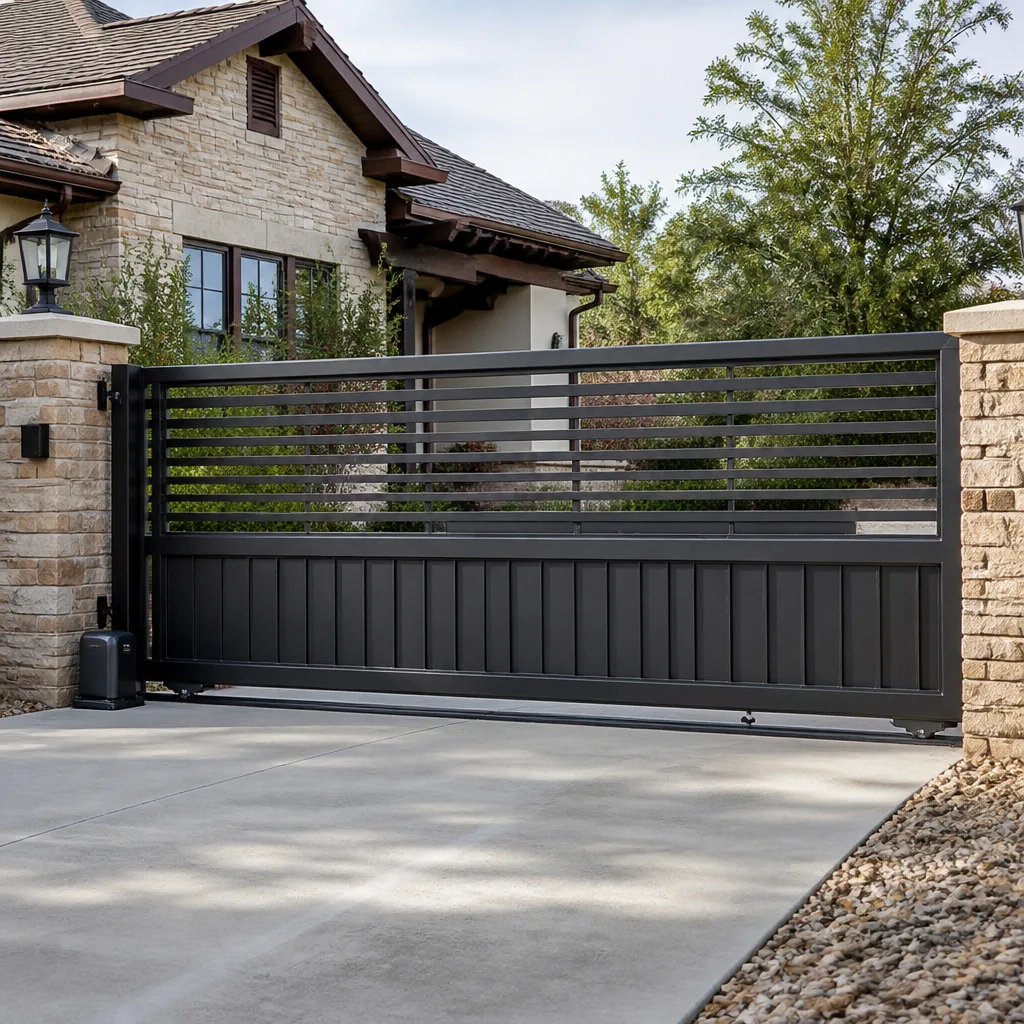 Sliding driveway gates
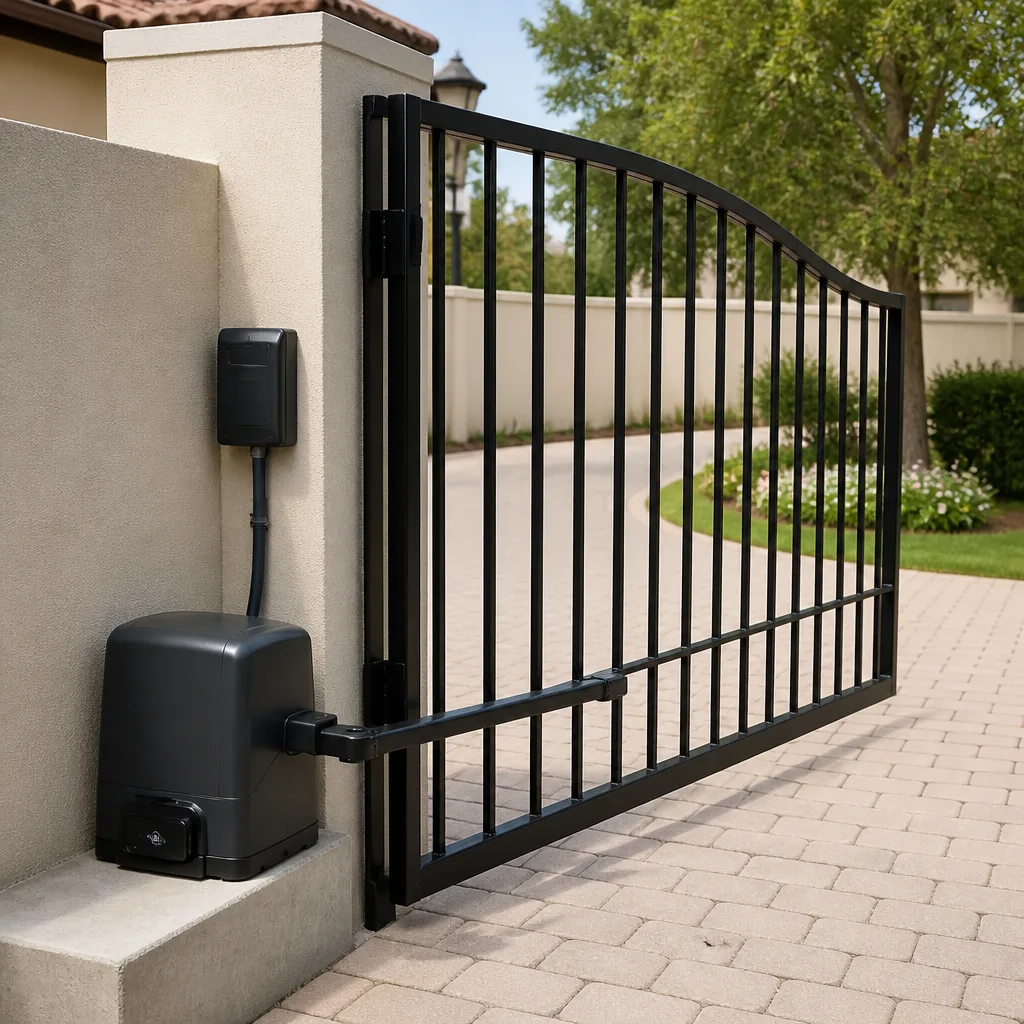 LiftMaster operators
Free on-site gate assessment - hinges, posts, and your LiftMaster or Nice gate operator checked before anything is quoted
The assessment is free and the quote is the invoice.
Get your free estimateDIY vs Professional Gate Repair: The Fort Lauderdale Homeowner’s Decision Guide
Florida homeowner’s insurance policies increasingly include gate-related injury exclusions when the gate opener was self-installed or self-repaired without a licensed technician. It’s a clause buried in the fine print that most policyholders discover only after filing a claim, and it’s shifting the DIY-vs-professional calculation in ways most Fort Lauderdale homeowners haven’t considered. This guide draws a clear line between the maintenance tasks that are genuinely safe to handle yourself and the repair work that carries legal, financial, and physical risk no YouTube tutorial is worth taking. By the end, you’ll know exactly which category your gate problem falls into, what it should cost either way-see our Gate Repair Cost Breakdown: The Fort Lauderdale Homeowner’s Reference for 2026 for detailed pricing-and when calling a pro isn’t just safer but actually cheaper in the long run.
Quick Answer
Most Fort Lauderdale homeowners can safely handle basic gate maintenance like cleaning photo-eye sensors, lubricating hinges, and replacing remote batteries without any professional help. But gate opener electrical work, spring and cable repairs, and anything involving a gate that fails to auto-reverse after contact falls into professional territory because Florida statutes and the NEC make low-voltage gate wiring the legal domain of a licensed contractor. A botched DIY gate repair in Fort Lauderdale typically costs more to fix than the original our Gate Repair services would have, and it can void your homeowners insurance coverage for gate-related injuries.
Styles & brands we work with
Table of Contents
- The Liability Problem Most Fort Lauderdale Homeowners Miss
- What’s Safely DIY: Maintenance, Not Repair
- What Crosses the Line: Work That Creates Legal Exposure
- Florida Code, NEC Standards, and the Insurance Fine Print
- The Real Cost Comparison: DIY vs Professional in Fort Lauderdale
- The Warranty-Safe DIY Limit for Major Opener Brands
- The Middle Path: Prep Work That Lowers Your Professional Bill
- Common Mistakes to Avoid
- When to Call a Professional
The Liability Problem Most Fort Lauderdale Homeowners Miss
The DIY-versus-professional debate for gate repair is usually framed around cost. That’s the wrong frame in Fort Lauderdale. The real decision factor here is liability, because a gate that fails to reverse and injures someone is the homeowner’s legal exposure, not the technician’s.
Here’s the scenario that plays out more often than anyone wants to admit. A homeowner replaces a gate opener control board themselves after watching a tutorial. Everything seems fine for three weeks. Then a delivery driver props the gate open, it closes unexpectedly, and they’re injured. The homeowner files a claim with their Florida homeowners insurance policy. The adjuster reviews the claim, finds the opener was self-serviced without a licensed technician, and points to the gate-related injury exclusion that quietly exists in many updated Florida policies. Claim denied. Legal fees accumulate. The homeowner is now facing a personal injury lawsuit with no insurance coverage behind them.
This isn’t hypothetical fear-mongering. We’ve spoken with Fort Lauderdale homeowners who discovered these exclusions the hard way. Florida’s insurance market has been tightening for years, and gate systems, because they’re classified as automatic equipment rather than standard household appliances, are increasingly singled out in policy language. The distinction matters: insurance underwriters treat a sliding driveway gate the way they treat a pool enclosure, as an attractive nuisance with documented injury risk.
What makes this especially relevant in Fort Lauderdale is density. We have narrow lots in neighborhoods like Victoria Park and Rio Vista where gates are close to sidewalks. We have gated communities throughout Lauderdale Isles and Coral Ridge where delivery traffic is constant. A gate malfunction in a low-traffic area might go unnoticed for months. In Fort Lauderdale, where gate-adjacent foot traffic is the norm, it’s an incident waiting to happen.
What’s Safely DIY: Maintenance, Not Repair
Maintenance and repair are different activities, and the distinction matters more than most homeowners realize. Maintenance keeps a functioning gate working. Repair restores a broken gate to function. The first is fair game for a careful homeowner. The second carries risk that scales with the electrical and mechanical complexity involved.
Here are the maintenance tasks that are genuinely safe for a Fort Lauderdale homeowner to handle:
- Cleaning photo-eye sensors. These are the small sensors near the bottom of the gate track that stop the gate when something crosses the beam. Salt air and humidity in Fort Lauderdale leave a film on them that causes false reverses or failure to close. A microfiber cloth and a minute of your time fixes most sensor-related issues.
- Lubricating gate hinges and wheels. Use a silicone-based lubricant, not WD-40. Coastal air accelerates rust, so quarterly lubrication in Fort Lauderdale is the single best way to extend hardware life. Avoid the opener chain or belt unless the manufacturer’s manual specifically recommends it.
- Replacing remote batteries. If your gate opener remote works intermittently or only at close range, the battery is the first suspect. This is a two-minute job that requires zero technical knowledge.
- Clearing debris from the track or rail. After Fort Lauderdale’s heavy summer storms, leaves, sand, and small branches end up in slide gate tracks. Removing visible debris is safe and prevents motor strain.
- Testing the auto-reverse function monthly. This isn’t a repair, but it’s the most important maintenance habit you can build. Place a 2×4 or similar object in the gate’s path and confirm the gate reverses on contact. If it doesn’t, stop using the gate and call a professional immediately.
- Documenting what you see and hear. Taking photos and videos of unusual noises, jerky movement, or error codes saves diagnostic time when a technician does get involved.
None of these tasks involve opening the control box, removing the motor housing, touching springs, or running new wire. That’s intentional. The line between maintenance and repair is the line between safe and not worth it.
What Crosses the Line: Work That Creates Legal Exposure
There’s a class of gate work that seems approachable on the surface, especially with a YouTube video and an afternoon to spare, but creates legal and safety exposure that no amount of saved labor cost justifies. Here’s where the line sits.
Control board replacement
The control board is the brain of the opener. Wiring it incorrectly isn’t a cosmetic issue, it can disable safety features like auto-reverse and obstruction sensing while the gate appears to work normally. That’s the most dangerous failure mode possible: a gate that opens and closes fine while its safety systems are silently dead.
Limit switch adjustment
Limit switches, the small sensors that tell the gate when to stop, seem simple. They’re not. A gate that over-travels by a few inches can bend its own track, snap a chain, or crush something in the gap. Proper adjustment requires understanding travel distance, force settings, and the specific model’s adjustment sequence. Get it wrong and the gate keeps pushing after it should stop.
Force setting adjustments
Force settings control how hard the gate pushes before reversing. Too low and the gate reverses constantly. Too high and the gate will push through an obstruction rather than stop, which is how injuries happen. UL 325 safety standards dictate maximum allowable force. A homeowner adjusting force settings by feel is essentially guessing at a safety parameter.
Spring and cable work
Gate springs hold enough stored tension to cause severe injury if they release unexpectedly. A cable under tension snapping can take off a finger or worse. This is the category where the physical danger alone ends the DIY conversation, regardless of legal considerations.
Low-voltage wiring and splicing
Even though gate opener systems run on low-voltage DC power, the wiring work is regulated by the National Electrical Code. Running new wire for a keypad, adding a loop detector, or splicing a damaged photo-eye cable are all technically electrical work. In Florida, this falls outside the scope of what a homeowner can legally do without a license.
Any repair on a gate that currently fails the auto-reverse test
If your gate doesn’t reverse when it contacts an object, it’s an active safety hazard. Period. No other maintenance or repair matters until that function is restored. This is call-a-professional territory without exception.
Florida Code, NEC Standards, and the Insurance Fine Print
Understanding why gate wiring is regulated requires knowing one piece of context: gate openers are classified as automatic equipment under the National Electrical Code, specifically Article 300 for wiring methods and Article 680 for specialized equipment installations. Even though gate openers run on low voltage, usually 12V or 24V DC, the wiring and control systems fall under NEC jurisdiction because they connect to line voltage at the power source.
Florida has adopted the NEC statewide under Chapter 489 of the Florida Statutes, which governs contractor licensing. The relevant portion: electrical work of any kind, including low-voltage control wiring for gates, requires a licensed electrical contractor or a certified gate system contractor. A homeowner performing this work without a license isn’t just taking a risk, they’re performing work the state defines as outside their legal scope.
The insurance implication follows directly from this. Florida homeowners insurance policies are contracts, and most include clauses requiring the homeowner to maintain the property according to applicable codes and regulations. When a gate injury claim lands on an adjuster’s desk and the repair was performed by an unlicensed homeowner, the insurer has grounds to argue the loss arose from non-compliant work. That’s the gate-related injury exclusion at work, and it’s appearing in more Florida policies each renewal cycle.
Fort Lauderdale’s building department enforces its own gate permitting requirements for new installations. While repair work typically falls under maintenance exemptions, the line blurs when a repair involves structural components, new wiring runs, or significant opener replacement. If you’re unsure whether your gate project needs a permit, the city’s Building Services division answers that question, but the practical answer is that any work involving new wiring or structural modification belongs in professional hands anyway.
The Real Cost Comparison: DIY vs Professional in Fort Lauderdale
Let’s talk actual numbers. In Fort Lauderdale, most gate opener repairs run $180 to $340 before parts. Full opener replacement ranges from $650 to $1,500 installed, depending on the opener and gate configuration. But the DIY calculation isn’t as simple as subtracting the labor and pocketing the difference. Here’s the real math, including what homeowners typically undercount:
- The part you ordered might not be the part you need. Gate opener control boards, limit switches, and photo-eyes are model-specific. LiftMaster and FAAC have dozens of board revisions that look nearly identical but aren’t interchangeable. Ordering the wrong part online is the single most common DIY outcome we encounter. Now you’ve paid for a part, paid for return shipping, and still don’t have a working gate.
- Tools are a real cost. Gate opener work requires a multimeter, a set of security bits (many opener brands use tamper-resistant fasteners), and often a crimping tool for wire connections. If you don’t already own these, you’re buying $75 to $150 worth of tools for a single job.
- The call-out fee to fix a botched DIY repair is higher. When a homeowner opens the control box, moves connections around, and gives up, the technician arrives to find a non-standard configuration that takes longer to diagnose. In our experience in Fort Lauderdale, a botched DIY attempt adds 30 to 60 minutes of diagnostic time to the repair.
- Your time has value. A DIY opener diagnosis involves watching tutorials, reading forums, ordering parts, waiting for shipping, and troubleshooting. Realistically, that’s 4 to 8 hours of your time, often spread across multiple days with a non-functional gate the entire while. In Fort Lauderdale, where after-work hours are precious, that’s a real cost.
The break-even point on gate opener repairs is roughly $150 in parts value. Above that number, the hidden costs of DIY start swallowing the labor savings. Below it, the repair is probably simple enough that the pros aren’t charging much anyway. The exception is diagnostic work: knowing which part is actually broken is the most valuable part of the service, not the physical act of replacing it.
The Warranty-Safe DIY Limit for Major Opener Brands
One of the least-discussed aspects of DIY gate repair is what it does to your opener’s manufacturer warranty. Every major brand, including LiftMaster, FAAC, BFT, and Mighty Mule, includes warranty language that voids coverage for damage resulting from unauthorized service. The practical question: what can you do without voiding coverage?
Here’s what the major brands allow by the manual, and what they don’t:
LiftMaster
The homeowner manual explicitly authorizes photo-eye cleaning, remote battery replacement, and basic force-testing (the monthly auto-reverse check). Opener housing removal, control board access, and limit switch adjustment are warranty-sensitive: LiftMaster’s warranty doesn’t cover damage caused by unauthorized repairs. If you open the control box and something fails later, the manufacturer has grounds to deny the claim.
FAAC
FAAC makes professional-grade openers that are generally not sold through consumer retail channels. Most FAAC systems in Fort Lauderdale were installed by contractors, and the warranty expects professional service. Homeowners can clean sensors and replace remote batteries. Everything else falls outside the DIY envelope if you want to preserve the coverage.
BFT
BFT’s warranty covers manufacturing defects, not service-related failures. Like FAAC, these are commercial-grade systems. There’s essentially no DIY-friendly repair path that doesn’t risk the warranty.
Mighty Mule
Mighty Mule is the most consumer-friendly brand, marketed for DIY installation. The manuals are written for homeowners and include troubleshooting guides. Even so, control board replacement and force adjustments require following the manual precisely, and Mighty Mule’s warranty excludes damage from incorrect installation or unauthorized repair.
The pattern across all nine major brands we work with (LiftMaster, FAAC, BFT, Linear, Viking, Ghost Controls, DoorKing, Elite, and Mighty Mule) is consistent: cleaning, battery replacement, and debris clearing are fine. Anything involving the control board, wiring, springs, or force settings is not. If you care about your warranty, the manufacturer has already drawn the line for you.
The Middle Path: Prep Work That Lowers Your Professional Bill
You don’t have to choose between all-DIY and all-professional. There’s a middle path that gives you a faster, cheaper professional repair while respecting the safety and legal boundaries. Here’s what smart Fort Lauderdale homeowners do before calling for gate repair service:
- Document the problem thoroughly. Take a clear video of the gate misbehaving, note any error codes or blinking lights on the opener, and record when the issue started. A video is worth 20 minutes of diagnostic time because the technician can see and hear what you’re describing. In Fort Lauderdale, where afternoon thunderstorms can interrupt repair windows, good documentation means the technician arrives knowing what to expect.
- Clear access to the gate and opener. Trim back hedges near the gate track, move vehicles out of the swing path, and clear space around the opener box. South Florida landscaping grows aggressively, and a technician spending 15 minutes with a machete is a technician you’re paying to do yard work.
- Know your opener brand and model. The model number is on a label on the opener housing or inside the control box. Having this ready saves the technician from disassembling things just to identify the unit. If you have a LiftMaster LA400, a FAAC 391, a BFT Deimos, or a Mighty Mule MM371W, write it down before you call.
- Assemble any records of previous repairs or installations. If a previous owner had work done, the receipt or invoice tells the technician what was touched and when. Older Fort Lauderdale properties, especially in neighborhoods like Lake Ridge and Shady Banks, often have gate systems that have been through multiple modifications over the years.
- Clear the path for the auto-reverse test. The technician will test the gate’s safety functions as part of any repair. Having a clear area to do that speeds up the verification process.
None of these steps touch anything technical, and none of them void your warranty or create liability exposure. They simply reduce the professional’s on-site time, which reduces your labor bill. It’s the most cost-effective prep work in gate repair.
Common Mistakes to Avoid
- Adjusting the force setting to make the gate “stronger.” A gate that keeps reversing is annoying. Crank up the force and it’ll push through, including through whatever was causing the reversal. This is how force-related injuries happen, and it’s specifically prohibited under UL 325 safety standards that Florida enforces.
- Replacing a control board without checking compatibility. Board revisions within the same brand and model can be incompatible. We see Fort Lauderdale homeowners who bought a used LiftMaster board on eBay, wired it in, and discovered it was for a different revision that doesn’t support the existing photo-eye configuration.
- Buying a cheap generic photo-eye instead of the brand-specific part. Generic sensors may look identical but use different voltage or mounting patterns. The result is false obstruction readings or no obstruction reading at all, which is worse than no sensor.
- Ignoring a gate that intermittently fails, writing it off as humidity or temperature. Fort Lauderdale’s humidity and salt air do affect gate components, but intermittent failures have a cause that’s findable. Waiting until the gate fails completely only increases the repair cost and extends the period where the gate is a safety hazard.
- Attempting spring replacement based on a video. Gate springs store massive tension. The specific tooling and technique required to release that tension safely isn’t learnable from a 12-minute video. Every year, ER visits happen because someone tried this.
- Skipping the monthly auto-reverse test because the gate “seems fine.” The entire point of the test is that safety failures are invisible in normal operation. A gate that opens and closes fine can still have a failed auto-reverse function. In Fort Lauderdale, with steady delivery traffic and kids playing near gates, this test is non-negotiable.
- Running new wiring without checking local requirements. Even low-voltage wire runs for a keypad or loop detector fall under electrical code. Doing it yourself and having it fail later is a liability event, not just an inconvenience.
When to Call a Professional
Call a gate repair professional if your gate fails or behaves inconsistently on the monthly auto-reverse test, if the opener emits a burning smell or unusual grinding noise, if the gate moves unevenly or jerks during travel, if you see exposed or frayed wiring anywhere along the track, or if the gate won’t respond to remotes or keypads after you’ve confirmed fresh batteries. These are symptoms of problems that don’t self-correct and don’t respond to maintenance. For additional help, explore more guides & resources on our blog. Calder Gate Repair Fort Lauderdale offers free estimates in Fort Lauderdale, with a live person answering your call 24/7 and a written price before any work starts. Call (754) 354-2542 and we’ll get your gate diagnosed and priced the same day.
See the difference
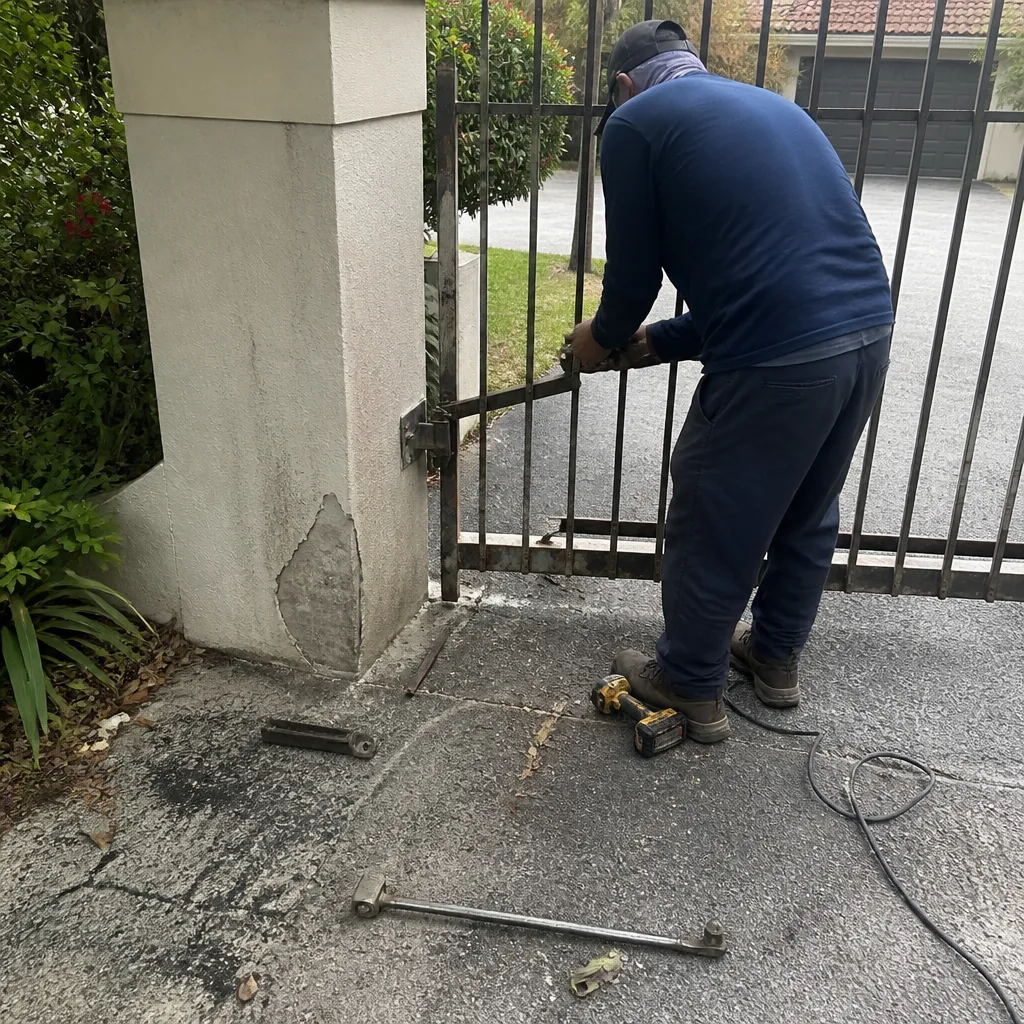 Before
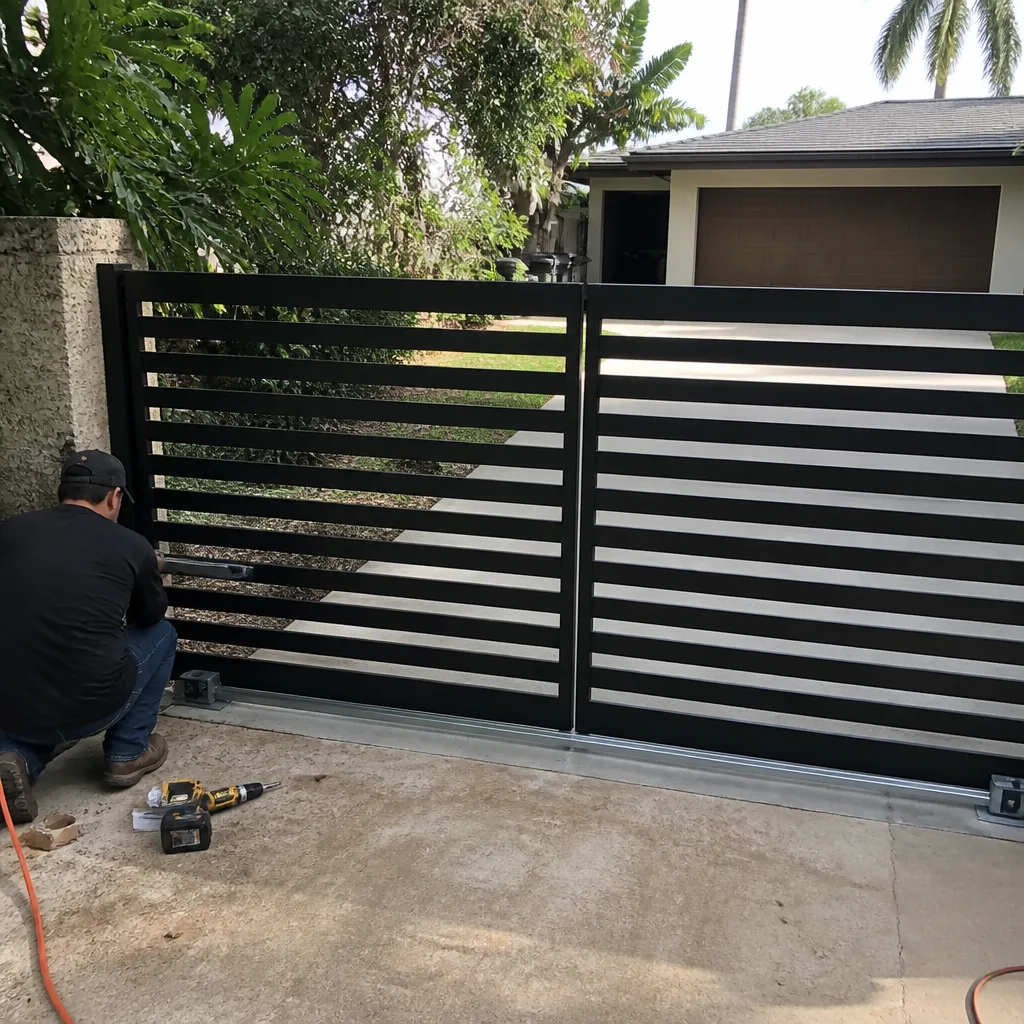 After
After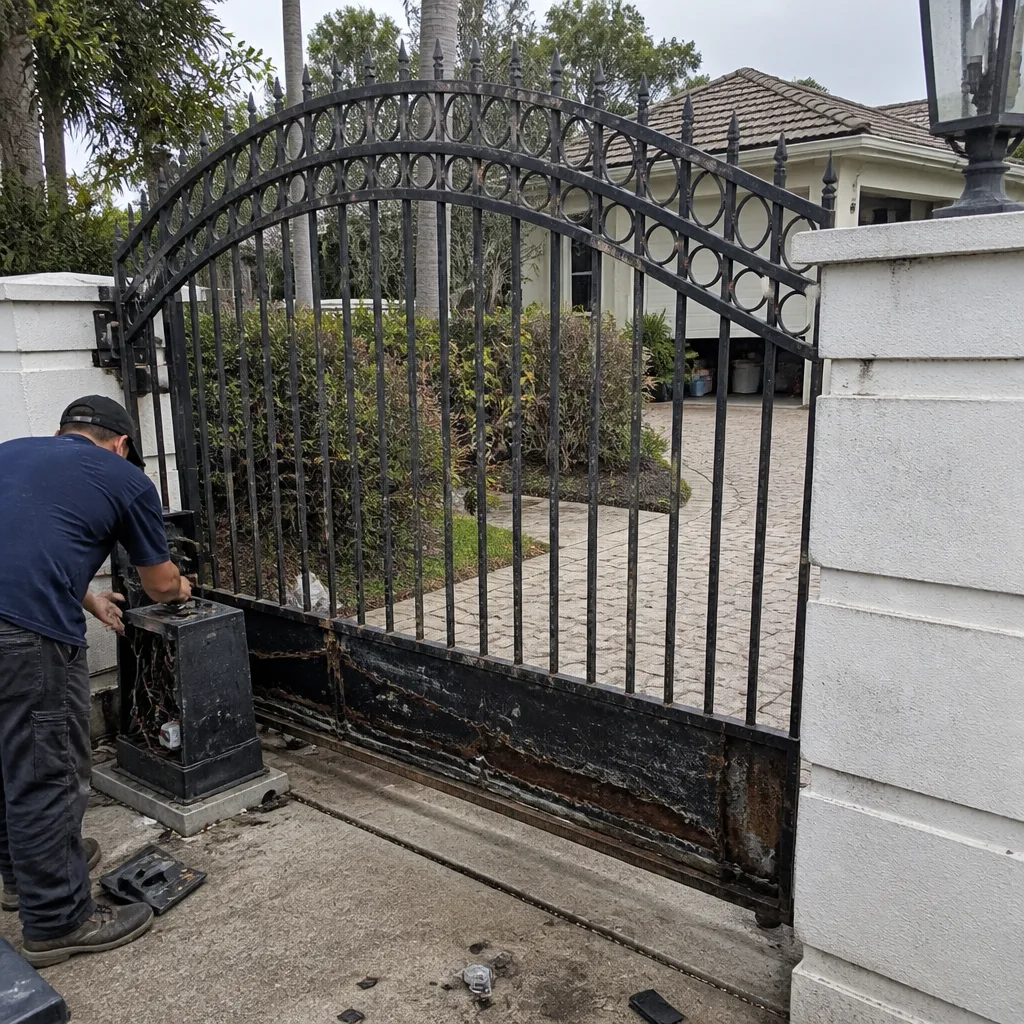 Before
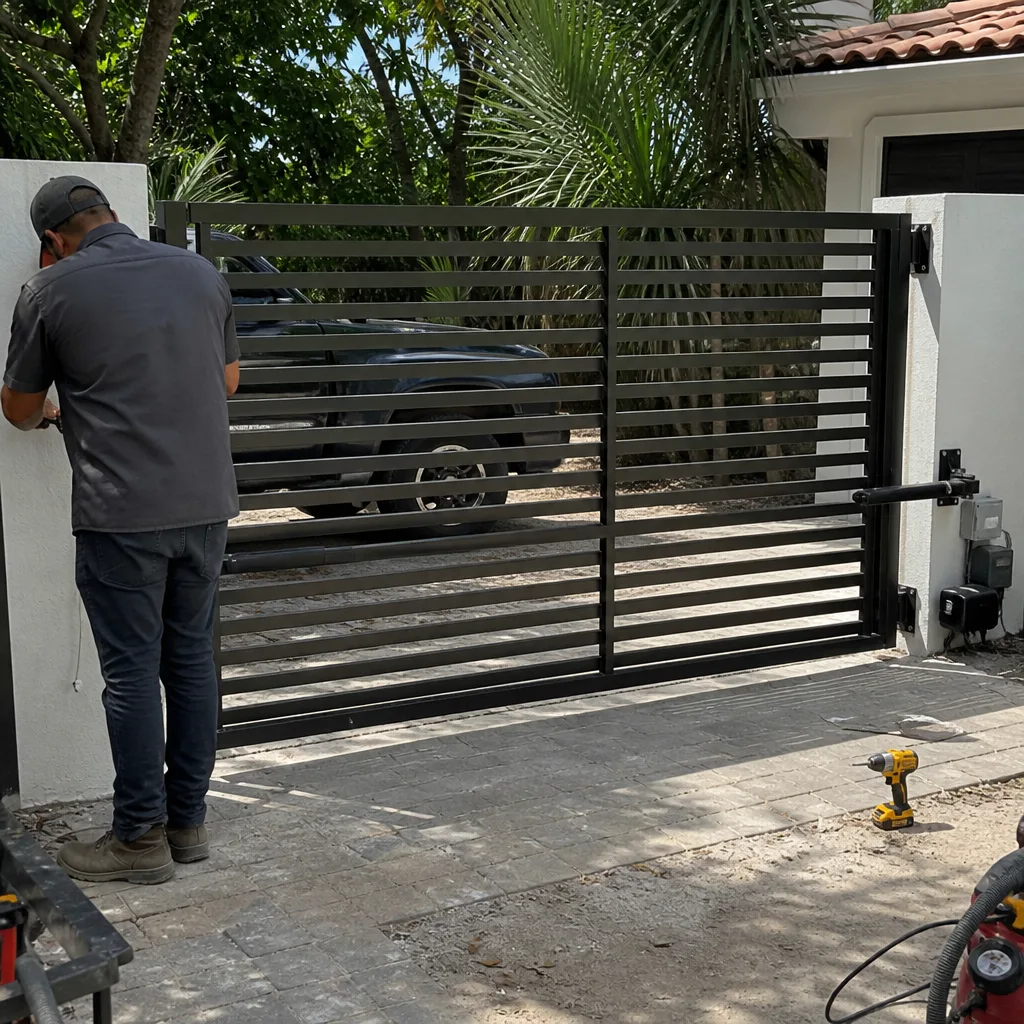 After
After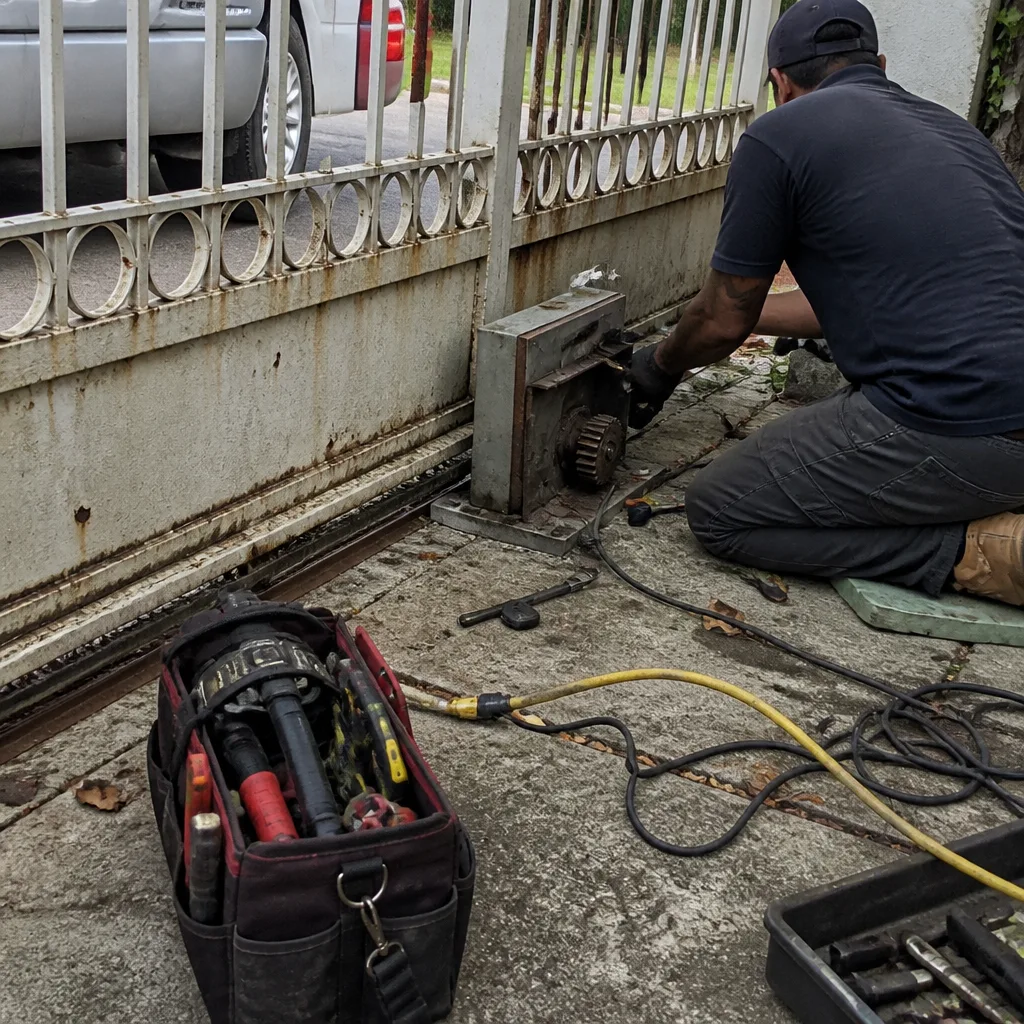 Before
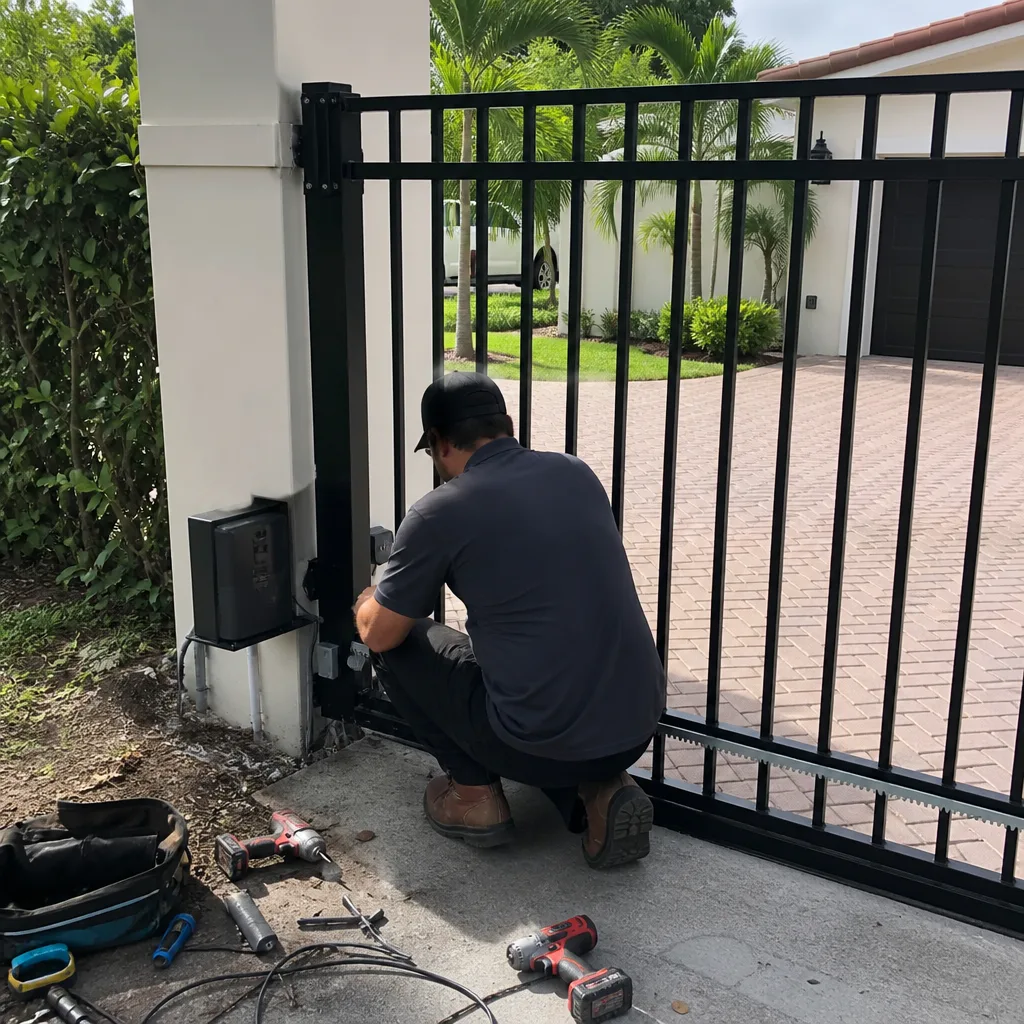 After
AfterFrequently Asked Questions
Most gate opener repairs in Fort Lauderdale run $180 to $340 before parts, with full opener replacement typically ranging from $650 to $1,500 installed depending on the gate configuration and opener brand. Every Calder Gate Repair job includes a written price before any work starts, so the number you agree to is the number you pay. Call (754) 354-2542 for a specific quote on your gate.
No. Florida Statutes Chapter 489 and the adopted National Electrical Code classify gate opener wiring, even low-voltage control wiring, as electrical work that requires a licensed contractor. Performing this work yourself creates insurance exposure because a gate-related injury claim can be denied under exclusions for non-compliant self-repairs.
You can safely clean photo-eye sensors, lubricate hinges with silicone spray, replace remote batteries, clear debris from the track, and perform the monthly auto-reverse test. These tasks don’t involve opening the control box, touching springs, or running wire, and they don’t void manufacturer warranties.
In most cases, yes. LiftMaster, FAAC, BFT, Mighty Mule, and other major brands exclude warranty coverage for damage resulting from unauthorized repairs. Cleaning sensors and replacing remote batteries are fine. Control board access, force adjustments, and wiring work are warranty-sensitive and should be handled by a professional.
Calder Gate Repair Fort Lauderdale dispatches technicians with a live, trackable arrival time rather than a vague four-hour window. A live person answers every call 24/7, so you can book a visit and know exactly who is coming and when they’ll arrive. Calls are answered by a real human, not a voicemail or chat bot.
That’s covered by the 365-Day Done Right Promise: if the repair fails within 365 days, Calder returns at no charge to make it right. Every repair includes this guarantee in writing, and a free second visit is included, not optional. That’s the standard for every job, including gate opener repair and electric gate repair in Fort Lauderdale.
The Bottom Line
The DIY-versus-professional gate repair decision in Fort Lauderdale comes down to this: maintenance is yours, repair is ours. Clean the sensors, lubricate the hinges, replace the remote batteries, and test the auto-reverse monthly. Anything involving the control board, springs, wiring, force settings, or limit switches crosses into professional territory because the legal, insurance, and safety exposure in Florida outweighs any labor savings. And if you’re unsure which category your gate problem falls into, call (754) 354-2542. Calder Gate Repair Fort Lauderdale provides gate repair in Fort Lauderdale, gate opener repair in Fort Lauderdale, and free estimates with a written price before any work begins. Learn more about our Calder Gate Repair Fort Lauderdale home services, or call today and talk to a real person who can diagnose your gate over the phone.
Written by Nico Alvarez, Owner at Calder Gate Repair Fort Lauderdale, serving Fort Lauderdale since 2009.