
Last updated October 16, 2026
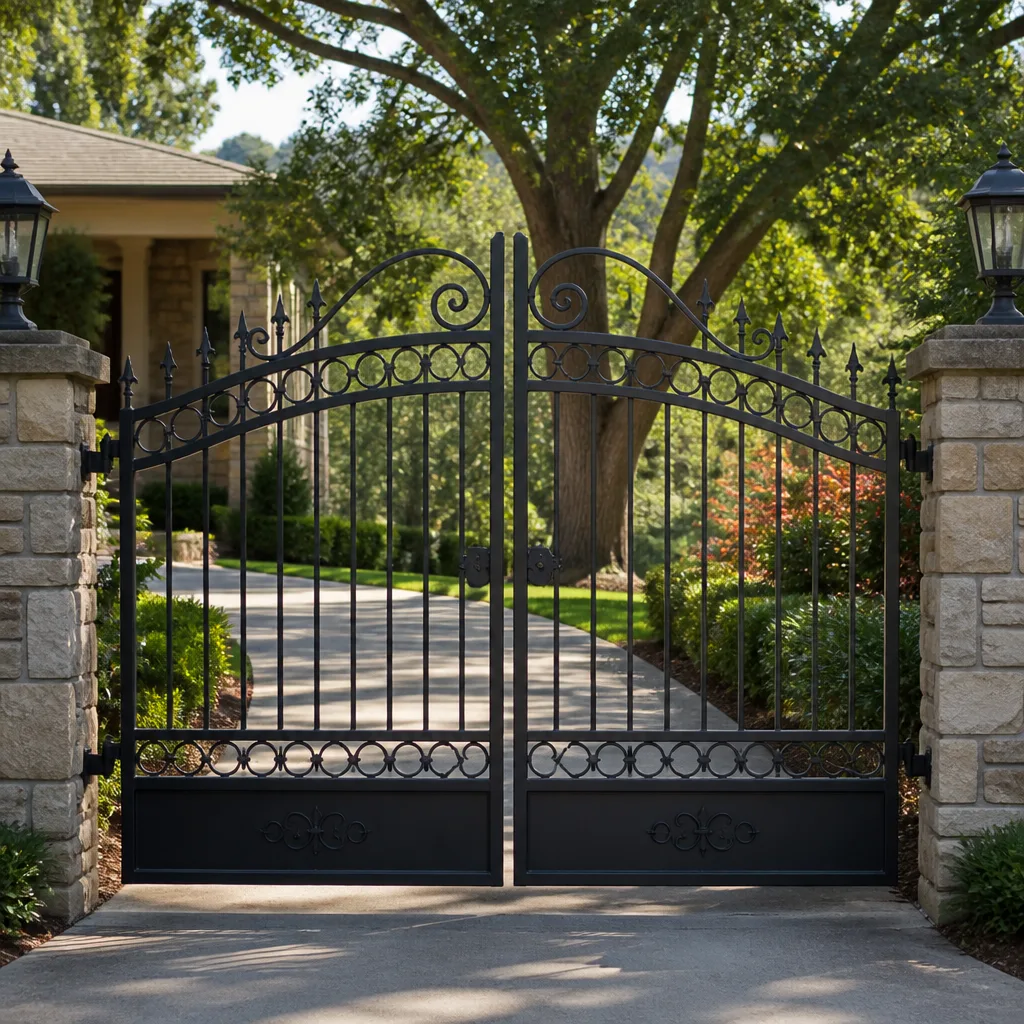 Wrought iron
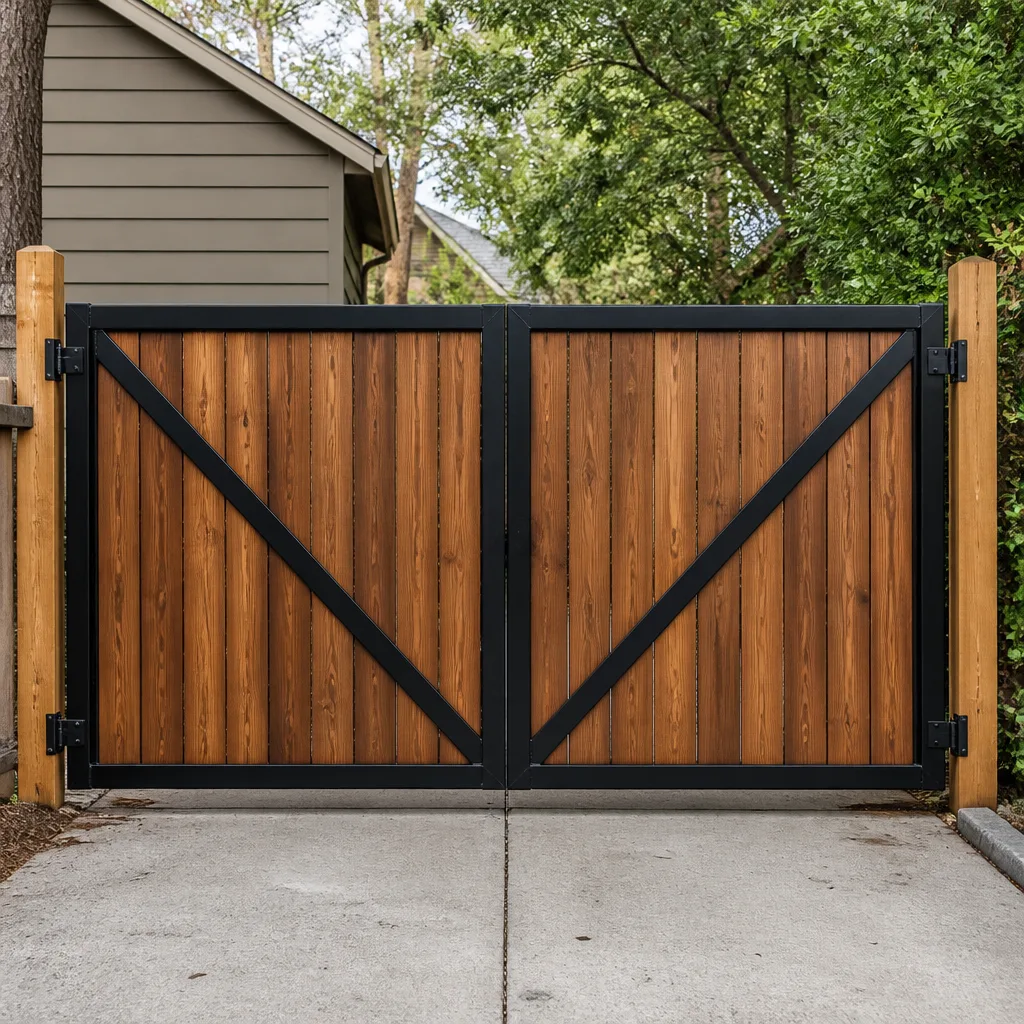 Wood & steel frame
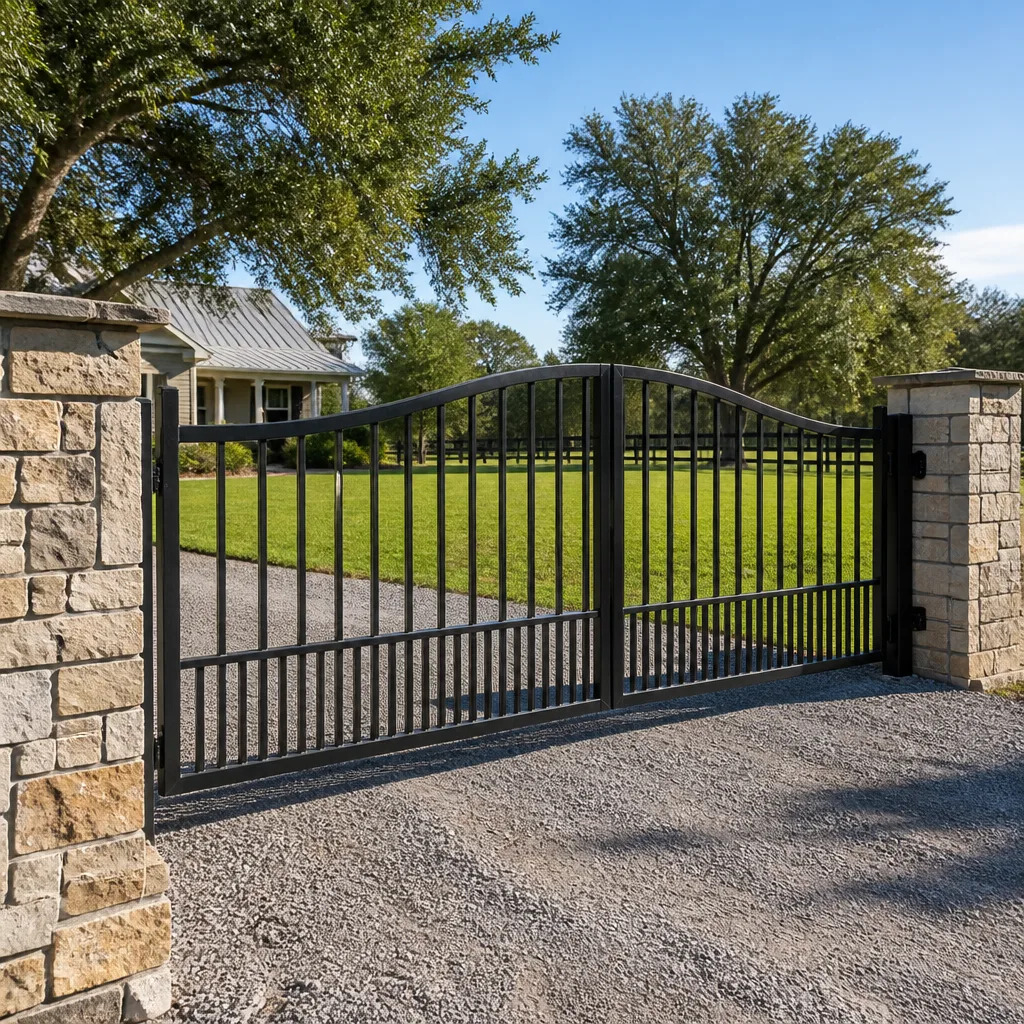 Farm & ranch
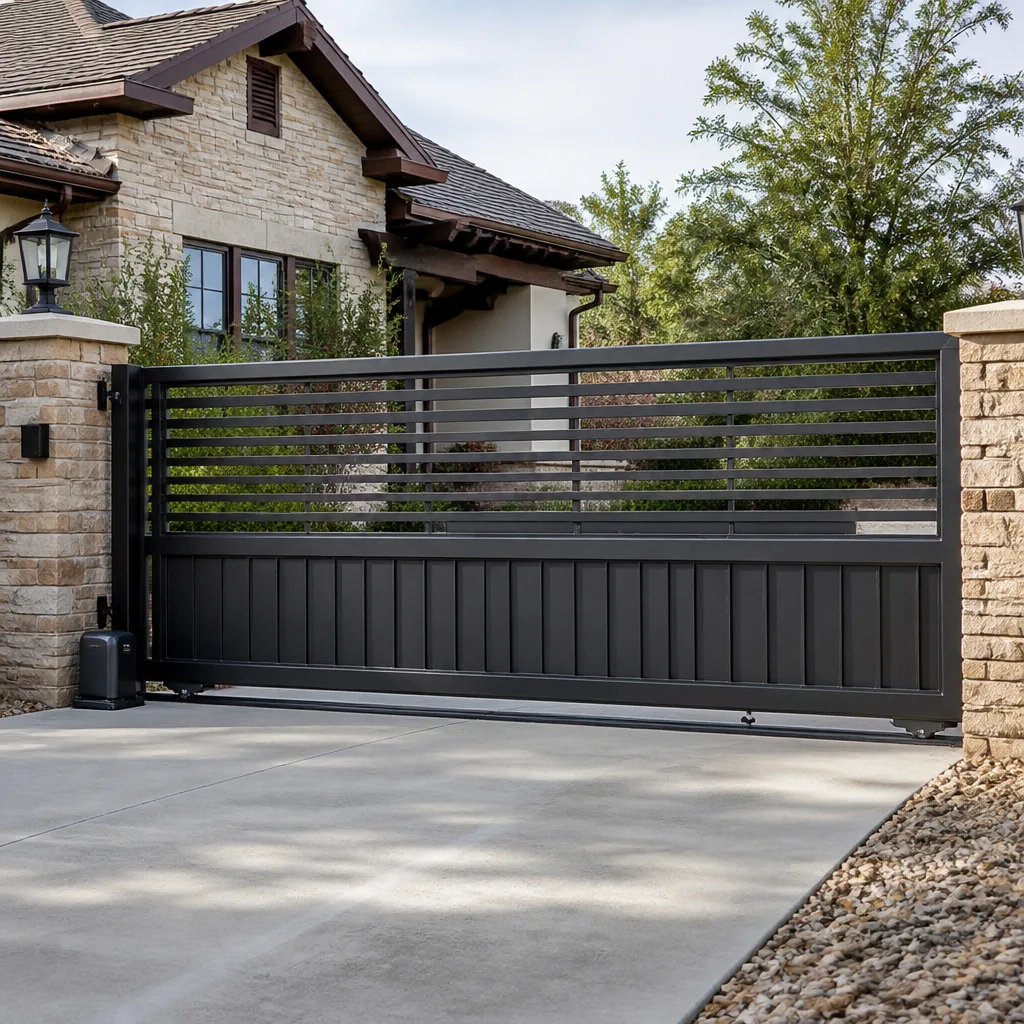 Sliding driveway gates
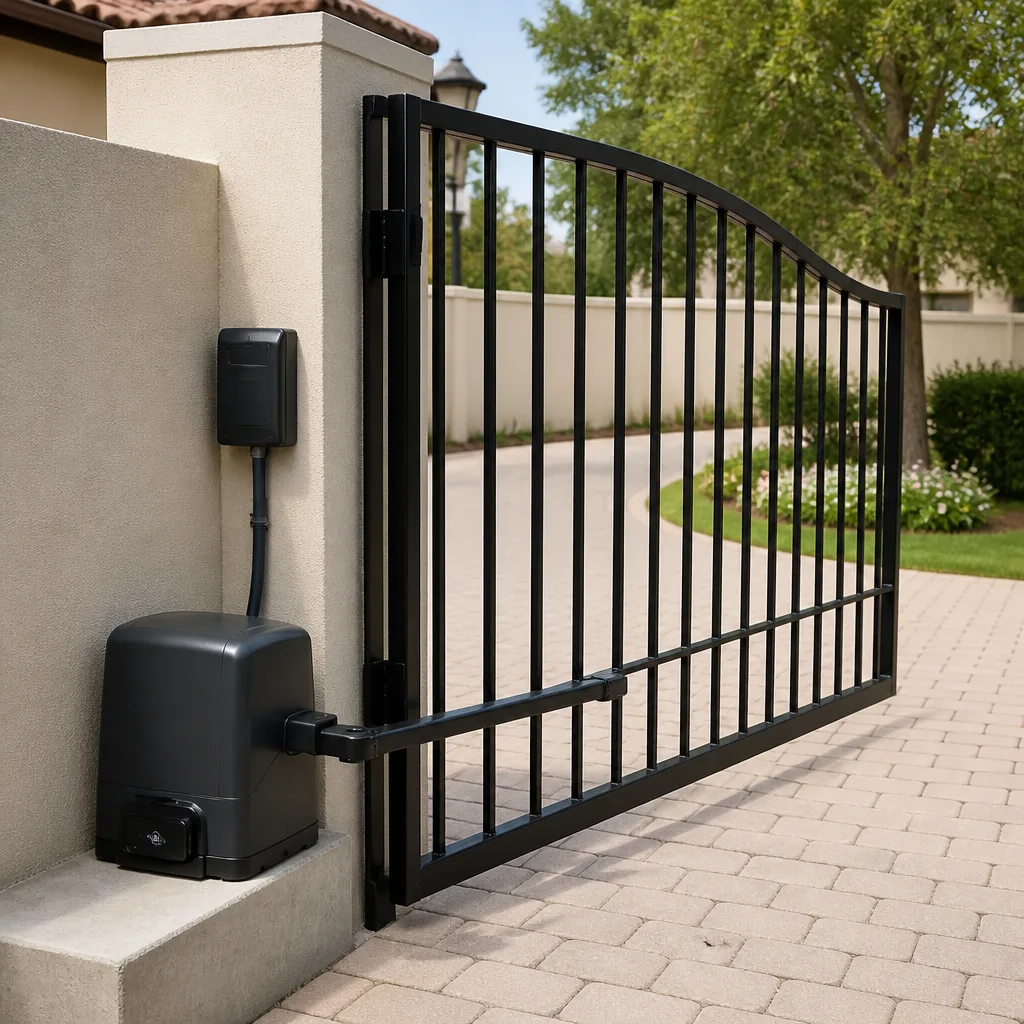 LiftMaster operators
Free on-site gate assessment - hinges, posts, and your LiftMaster or Nice gate operator checked before anything is quoted
The assessment is free and the quote is the invoice.
Get your free estimateSeasonal Gate Repair Care for Fort Lauderdale: Year-Round Homeowner’s Guide
Most gate repair calls in Fort Lauderdale don’t arrive during hurricane season. They spike in November. Homeowners who deferred post-storm maintenance through the wet months suddenly discover their safety reversals have stopped working right as snowbird visitors start pulling into driveways. This guide runs on the real calendar South Florida actually lives by: wet season, hurricane prep, post-storm recovery, and dry season. You’ll learn what each phase does to your gate hardware, what to check, what to leave alone, and when our Gate Repair services in Fort Lauderdale should take over.
Styles & brands we work with
Quick Answer
Seasonal gate care in Fort Lauderdale means working with four distinct phases rather than four traditional seasons: the wet season (June through September) demands waterproofing and drainage checks, hurricane prep requires safely disabling automation before a named storm, post-storm recovery follows a strict power-up sequence, and the dry season (November through May) brings its own set of problems like seal shrinkage and static interference. A homeowner who spends about 45 minutes per quarter on these tasks will avoid most emergency repair calls entirely.
Table of Contents
- Wet Season Gate Care (June – September): Moisture Is the Silent Killer
- Hurricane Prep Checklist: Securing Your Gate Before a Named Storm
- Post-Storm Inspection: The Order of Operations to Restore Gate Function
- Dry Season Gate Care (November – May): Low Humidity Causes Different Problems
- The 12-Month Fort Lauderdale Gate Maintenance Calendar
- What Seasonal Gate Maintenance Costs in Fort Lauderdale
- Common Mistakes to Avoid
- When to Call a Professional
- Frequently Asked Questions
- The Bottom Line
Wet Season Gate Care (June – September): Moisture Is the Silent Killer
Fort Lauderdale’s wet season isn’t just rain. It’s daily afternoon downpours, humidity that never dips below 70 percent, and standing water that pools around gate posts for hours at a time. We’ve seen control boards in Fort Lauderdale neighborhoods like Victoria Park and Rio Vista fail not because of a single flood event, but because condensation accumulated inside the operator housing over four straight months. The damage is slow, and by the time the gate stops responding, the board is already corroded beyond repair.
Ground-level components take the worst beating. Photo eye sensors sit inches above the driveway and collect splashback grime. Limit switches, the small sensors that tell the gate when to stop, corrode at their connection points. Wheel bearings on sliding gates grind through wet silt. None of these failures announce themselves loudly. The gate still opens. It just opens slower, or stops two inches short, or reverses for no reason.
Wet Season Waterproofing Checklist
- Clear drainage channels around gate posts every two weeks. Standing water is the fastest way to rot a post base in Fort Lauderdale’s sandy soil. Use a garden trowel to keep the gap around each post free of leaf litter and grass clippings.
- Wipe photo eye lenses with a dry microfiber cloth monthly. Humidity makes grime stick. A dirty lens causes phantom reversals that homeowners often misdiagnose as a bad motor.
- Check the operator housing seal. Look for gaps where the cover meets the base. If you see daylight through the seam, moisture is getting in. A tube of exterior silicone caulk solves most small gaps on LiftMaster and FAAC housings, though we recommend having a technician handle any seal replacement on boards with visible condensation already present.
- Run the gate through a full open-close cycle while it’s raining. Listen for grinding or hesitation. Wet weather amplifies friction problems that dry weather hides.
- Inspect the manual release mechanism. You want to know it works before you need it. Pull the release handle once during the wet season and confirm the gate rolls freely by hand.
For one specific failure we see every wet season: gate opener repairs in Fort Lauderdale spike in August and September due to swollen roller assemblies on slide gates. The track holds water, the rollers rust, and the opener motor burns itself out trying to push a gate that no longer rolls smoothly. A quick monthly roll test by hand catches this before it becomes a $400 motor replacement.
If your gate shows signs of intermittent function only during or after heavy rain, that points to water intrusion in the control board. This is not a DIY vs Professional Gate Repair: The Fort Lauderdale Homeowner’s Decision Guide situation. Powering the board repeatedly while wet shorts circuits that were already failing. Calder Gate Repair Fort Lauderdale sees this pattern constantly in Las Olas Isles and Coral Ridge, where salt air adds another layer of corrosion to exposed wiring.
Hurricane Prep Checklist: Securing Your Gate Before a Named Storm
When a named storm enters the cone for Broward County, you have about 36 to 48 hours before conditions deteriorate. That’s enough time to complete every step below if you work methodically. The goal is not to make your gate hurricane-proof. No gate is. The goal is to prevent wind-driven damage to the opener, reduce projectiles, and ensure you can manually control access after the storm passes.
Step-by-Step Hurricane Prep for Automated Gates
- Photograph the gate from both sides. Four photos: hinges, rollers, post bases, and the operator arm. This is your insurance documentation if the gate takes storm damage. Date-stamp them if possible.
- Disable the automation before the first sustained wind arrives. Find the power switch or breaker for the gate operator and turn it off. Do not rely on the remote to keep the gate closed. Storm surge and lightning strikes can trigger a phantom open signal. A gate left automated during hurricane-force wind becomes a sail.
- Engage the manual release. Every opener brand has a manual release mechanism, and the process varies by brand. For LiftMaster operators, pull the red release handle on the side of the motor housing and swing the gate by hand to confirm it moves freely. For FAAC units, look for the release key slot on the operator housing. Ghost Controls systems use a pull-pin on the arm itself. Mighty Mule operators have a release lever under the control box cover. If you don’t know where yours is, find it now, not during the storm.
- Close the gate and lock it in place. Swing gates need a drop rod driven into the sleeve set in the driveway, or a chain and padlock through the frame. Sliding gates need the wheel blocks or a C-clamp on the track. Never rely on the opener’s internal brake. It is not designed to hold against 100 mph wind loads.
- Remove or secure everything attached to the gate. This includes solar panels, battery boxes, decorative trim, and any sign that can tear loose. A loose sign becomes a projectile that takes out a window or a car.
- Charge the backup battery fully. If your opener has a battery backup (common on Elite and Viking models), plug it in now and let it reach full charge before the storm hits. After the storm, that battery may be your only way through the gate until grid power returns.
For bypass procedures on six common opener brands, the principles are the same: cut power, release the drive mechanism, secure the gate manually, and remove anything that can fly. The specific release location varies, which is why we recommend homeowners locate and test theirs during the dry season, not at the last minute. If you can’t find your manual release or the gate won’t budge by hand, call a technician before the storm window closes. A gate stuck halfway open is worse than a gate that never had automation.
This is also the moment to know whether your gate’s wet-season waterproofing held. If you ignored the drainage checklist above, you’ll discover blocked channels while scrambling in the rain. That’s a tradeoff a homeowner in Fort Lauderdale makes once and never again.
Post-Storm Inspection: The Order of Operations to Restore Gate Function
After the storm clears, the temptation is to flip the breaker and see what happens. Do not do that. The correct sequence matters because a gate operator that sat in standing water or took a lightning surge can fail catastrophically when powered up. We respond to post-storm gate failures across Fort Lauderdale every year, and a meaningful percentage of them are made worse by homeowners powering up wet electronics before anyone looked at them.
The Correct Post-Storm Power-Up Sequence
- Visually inspect before touching anything electrical. Walk the gate’s full path. Look for debris in the track, bent hinges, shifted posts, and branches on top of the operator housing. Take photos of any damage before moving anything.
- Check for standing water around the operator. If water is pooled around the base of the operator or inside the housing, do not restore power. The board and transformer need to dry completely or be replaced. This is a technician call.
- Inspect the manual release and hand-roll the gate. Disengage the opener and push the gate through its full travel by hand. If it binds, scrapes, or won’t roll, that’s a mechanical issue you need addressed before the automation gets involved.
- Check wiring connections for corrosion. Look at the terminal strip on the control board. Green or white crust on terminals is corrosion from salt air and moisture. Wiping it off does not fix the underlying problem.
- Restore power only after everything above passes. Turn the breaker on and test the gate with the wired keypad first, not the remote. The keypad uses a direct signal path and helps isolate whether a failure is in the receiver or the motor.
- Test the safety reversal. This is non-negotiable. Put a roll of paper towels in the gate’s path and close the gate. If the gate does not reverse on contact, stop using it immediately. A gate without a working safety reversal is a serious injury risk, especially where kids or pets are present.
What not to power on until a technician clears it: any operator that was submerged or partially submerged, any control board showing corrosion on terminals, any gate that took a direct hit from a falling branch, and any opener that smells acrid or burned. These are not “wait and see” situations. They’re “call before you restore power” situations.
Post-storm gate restoration in Fort Lauderdale often requires electric gate repair, particularly for homes in flood-prone areas like Shady Banks and Edgewood. Salt water intrusion into wiring harnesses doesn’t dry out on its own. It keeps corroding until the connection fails completely, often weeks after the storm.
Dry Season Gate Care (November – May): Low Humidity Causes Different Problems
Fort Lauderdale’s dry season is when the gate finally dries out, and that’s exactly when a different set of failures shows up. Humidity that hovered around 80 percent for months drops to the 50s and 60s. Rubber seals shrink. Grease dries out. Static electricity builds up on gate tracks and interferes with remote signals. The problems are quieter than a hurricane, but no less real.
Seal shrinkage is the one homeowners never expect. The rubber weatherstripping around the operator housing and along the gate frame absorbed moisture all wet season. When that moisture evaporates, the seals contract and pull away from their mounting surfaces. Hairline gaps open up. Dust gets in. Then the next wet season arrives and those gaps become water entry points. A tube of silicone caulk run along the seal edges every January prevents this cycle.
Static interference is the other dry-season signature. Low humidity means static electricity doesn’t dissipate as quickly. A sliding gate rolling over a steel track builds up a charge that can scramble the signal between your remote and the receiver. If your gate stops responding to remotes but works fine with the wired keypad, static is a likely culprit. The fix is usually a grounding wire from the track to a proper earth ground, plus a static suppression kit on the receiver. Mighty Mule and Ghost Controls units in particular are sensitive to this during Fort Lauderdale’s driest months, February and March.
Dry season is also the right time for:
- Lubrication of hinges, rollers, and chains with a dry PTFE lubricant. Wet greases attract dust and sand. Most gate hardware in Fort Lauderdale needs lubrication every four months, regardless of brand.
- Battery replacement in remotes and keypads. The heat of the dry season accelerates battery drain. Replace every January and you’ll rarely deal with a dead remote at the gate.
- Track cleaning on sliding gates. Months of dead grass, sand, and dust accumulate in the track channel. A shop vac with a crevice tool gets most of it. Do this before the wet season returns and packs the debris into a solid clog.
- Post re-tightening. The soil contracts slightly during the dry season. Gate posts that were solid in October can develop a tiny wobble by March. Grab the post and rock it. Any movement means the base bolts need attention before the wobble amplifies under motor load.
If your gate is a sliding model, dry season is the ideal time to address track alignment. The ground shifts subtly as moisture levels change, and a track that was true in September can be out of level by February. A misaligned track makes the opener work harder, which shortens motor life. This is one of the most common gate repair issues in Fort Lauderdale that we see being caught too late.
The 12-Month Fort Lauderdale Gate Maintenance Calendar
Print this section and tape it to the inside of your garage door. Each task is assigned to the South Florida season where it matters most, not to a spring-fall calendar that doesn’t apply here.
June (Wet Season Begins)
- Clear drainage around gate posts.
- Test manual release for free movement.
- Wipe photo eye lenses.
- Check operator housing seal for gaps.
July – September (Peak Wet Season)
- Monthly: wipe photo eyes, check housing seal, roll gate by hand to detect friction.
- After any flooding event: inspect control board for condensation. Do not power up if wet.
- September: test safety reversal with a paper towel roll.
October (Hurricane Prep Window)
- Complete the full hurricane prep checklist above.
- Charge backup battery completely.
- Photograph gate from all angles for insurance records.
November (Post-Storm Recovery and Snowbird Season)
- Perform the full post-storm inspection sequence before normal use.
- Test safety reversal again. November is when most reversal failures surface in Fort Lauderdale.
- Check wiring connections for corrosion.
December – January (Dry Season Deep Maintenance)
- Replace remote and keypad batteries.
- Run a silicone bead along dried-out rubber seals.
- Lubricate hinges, rollers, and chains with PTFE.
February – March (Peak Dry Season)
- Check for static interference on remotes. If failures happen only with remotes, call a technician about grounding.
- Rock-test posts for movement.
- Vacuum sliding gate tracks.
April – May (Pre-Wet Prep)
- Re-check drainage channels before rains return.
- Test the full automation cycle: open, close, reverse, remote, keypad.
- Schedule any deferred repairs now, before wet-season demand and pricing peaks.
What Seasonal Gate Maintenance Costs in Fort Lauderdale
Homeowners in Fort Lauderdale consistently ask what they should budget for gate upkeep, and the honest answer is that most of the tasks in The Complete Guide to Gate Repair in Fort Lauderdale are free if you do them yourself. The professional work, when needed, follows predictable ranges in this market.
| Service | Typical Cost Range in Fort Lauderdale |
|---|---|
| Photo eye cleaning and alignment | $75 – $140 |
| Limit switch replacement (per switch) | $120 – $220 |
| Control board diagnosis | $85 – $150 (applied toward repair) |
| Control board replacement | $280 – $650 depending on opener brand |
| Full gate tune-up (lubrication, alignment, safety test) | $150 – $300 |
| Battery backup replacement | $90 – $250 depending on model |
| Post-storm inspection and re-commissioning | $120 – $250 |
| Complete opener replacement (like for like, including labor) | $800 – $1,800 |
These ranges reflect what we quote and honor in Fort Lauderdale, not national averages. Your specific cost depends on the gate type, opener brand, and accessibility. Every job we do carries the same three guarantees: a written price before any work starts, a written guarantee on every repair, and a free second visit if the repair fails within the 365-Day Done Right Promise window. The number on the invoice is the number agreed to before a single bolt turns.
One note on parts: LiftMaster, FAAC, Elite, and Mighty Mule boards all fall at different price points, and some older models are no longer manufactured. We stock or can source boards for all nine brands we service, but lead times on discontinued boards can stretch to a week or more during peak season. If budgeting for a potential board replacement, plan for the higher end of the range above.
Common Mistakes to Avoid
- Powering up a gate after flooding without inspecting it first. Wet control boards short out on power-up. The $85 diagnosis becomes a $600 replacement because the board fried when voltage hit wet circuits.
- Leaving the gate automated during a storm. A phantom open signal during hurricane wind turns a 400-pound gate into a sail. Manual lock-down is the only correct storm posture.
- Ignoring a slow gate for months. Slowing operation is always a symptom of increasing friction or motor strain. By the time the gate stops completely, the damage is more expensive than the early intervention would have been.
- Using WD-40 on hinges and rollers. WD-40 cleans, but it also attracts dust and breaks down existing lubricant. Use dry PTFE lubricant on gate hardware in Fort Lauderdale’s sandy environment.
- Skipping the safety reversal test because “the gate has always worked fine.” Safety reversals fail silently. A gate that doesn’t reverse on contact is a serious injury risk, and in a city with as many fenced pools and driveways as Fort Lauderdale, that test should happen every quarter without exception.
- Replacing a board without finding the moisture source. The new board fails the same way in six months because water is still getting into the housing. Fix the seal and the drainage first, then replace the electronics.
- Testing storm prep for the first time during a hurricane warning. If you don’t know where your manual release is before the storm, you’ll be fumbling with a flashlight in your teeth while wind already moves tree branches. Locate and test it every dry season.
When to Call a Professional
Some seasonal gate tasks are straightforward homeowner work: clearing debris, wiping down photo eyes, testing the manual release. Others are not. Call a technician when you see corrosion on control board terminals, when the gate reverses for no reason repeatedly, when the opener makes a grinding noise that lubrication doesn’t fix, when the safety reversal fails the paper towel test, or when you’ve had water intrusion into the operator housing for any length of time. These conditions all point to failures that get worse, not better, with continued use. For more guides & resources on gate maintenance, visit our blog. Calder Gate Repair Fort Lauderdale offers free estimates in Fort Lauderdale. Call (754) 354-2542 and a live person answers, 24 hours a day, not a voicemail and not a bot.
Frequently Asked Questions
Every four months is the right cadence for gate hardware in Fort Lauderdale, and dry PTFE lubricant is the product to use. The sandy, salty environment breaks down lubricants faster than inland climates, and wet greases compound the problem by holding grit against moving parts.
You should close the gate, but only after disabling the automation and locking the gate manually. The automation must be powered off. Wind, storm surge, and lightning can all trigger a phantom open signal that sends your gate swinging into the storm.
Intermittent rain-only failures in Fort Lauderdale almost always indicate water intrusion in the control board or a connection. Water bridges circuits that should stay isolated. The failure clears when things dry out, which is exactly why it’s dangerous to ignore: corrosion is spreading under the board even when the gate works.
Most gate opener repairs in Fort Lauderdale run between $150 and $650 before parts, depending on what failed. A limit switch replacement sits at the low end. A full control board replacement on a premium brand like LiftMaster or FAAC sits at the high end. Call (754) 354-2542 for an exact quote with a written price before any work starts.
The safety reversal is the mechanism that makes the gate stop and reverse when it contacts an object. It matters here because Fort Lauderdale’s layout puts gates in daily contact with strollers, bikes, delivery workers, and pets. A failed reversal turns a convenience into a crushing hazard.
Yes. Calder Gate Repair Fort Lauderdale is factory-familiar with nine major brands including LiftMaster, FAAC, Mighty Mule, Elite, and Ghost Controls. If you own a gate opener in Fort Lauderdale, we likely service the brand you have. Call (754) 354-2542 and a live person answers with a real arrival time and an upfront price.
The Bottom Line
Fort Lauderdale gate care follows the calendar of South Florida, not the calendar of a Connecticut suburb. Wet season demands waterproofing and drainage. Hurricane prep demands a manual lock-down sequence you’ve practiced before the storm. Post-storm recovery demands patience and a strict power-up order that protects your electronics. Dry season demands lubrication, seal repair, and attention to the static and shrinkage problems that humidity kept hidden. About 45 minutes each quarter is enough to keep most gates running reliably through every phase. When professional help is needed, the right call is to Calder Gate Repair Fort Lauderdale, where every job carries a written price before work starts, a written guarantee on the repair, and a live person on the line 24/7 at (754) 354-2542.
Written by Nico Alvarez, Owner at Calder Gate Repair Fort Lauderdale, serving Fort Lauderdale since 2009.
See the difference
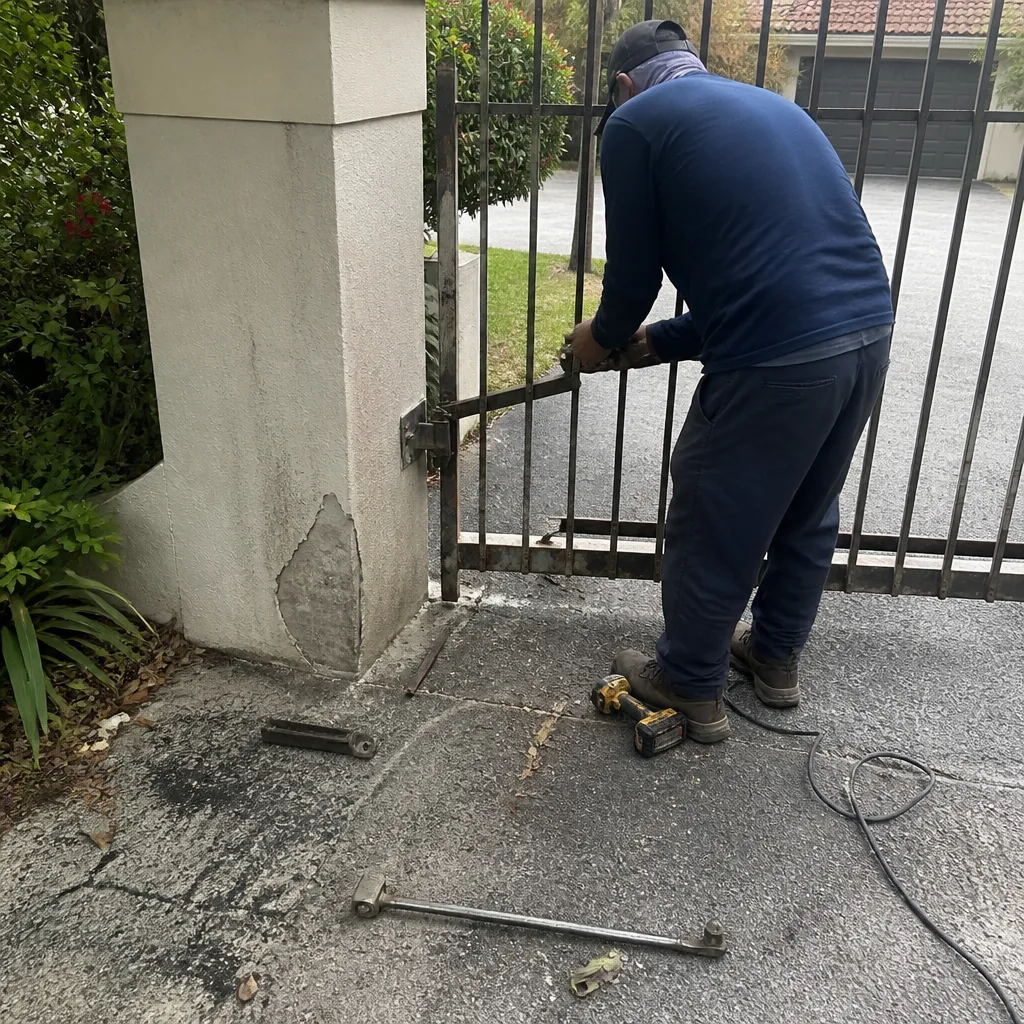 Before
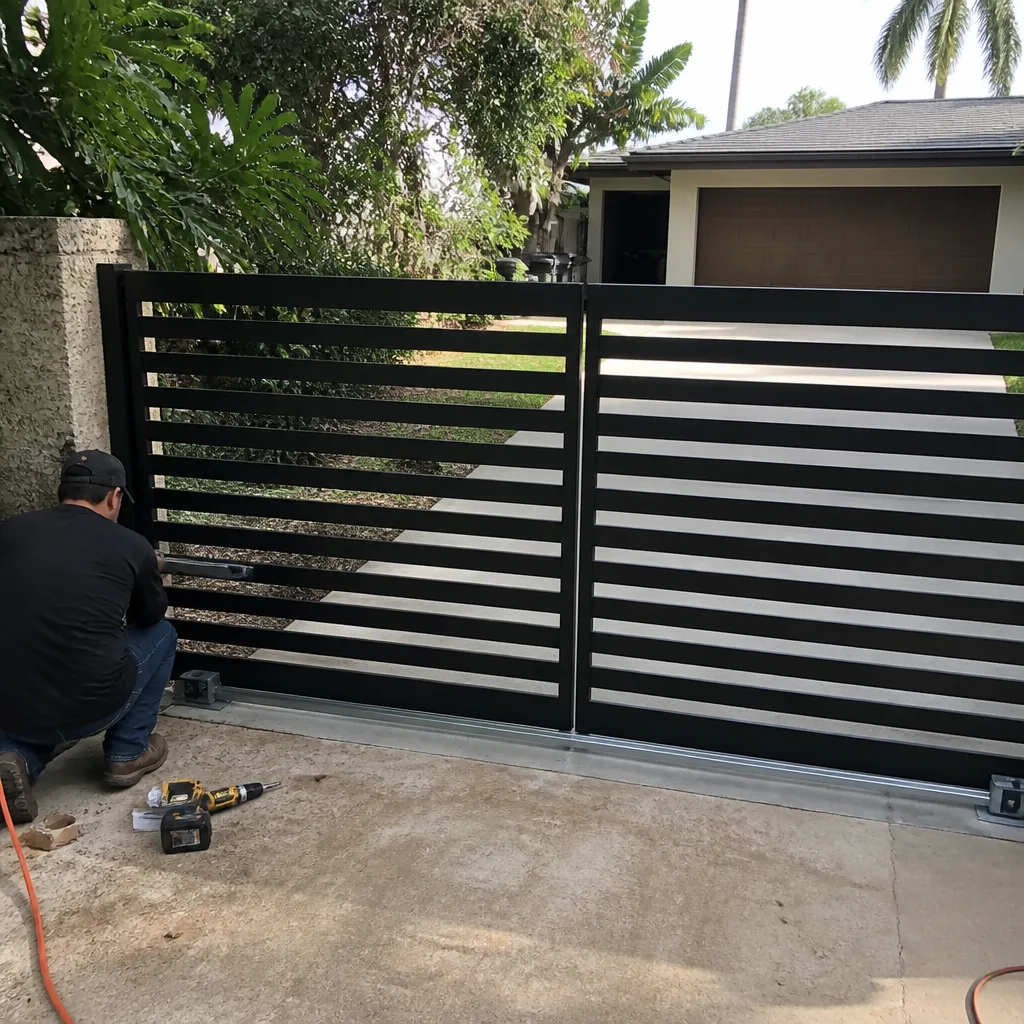 After
After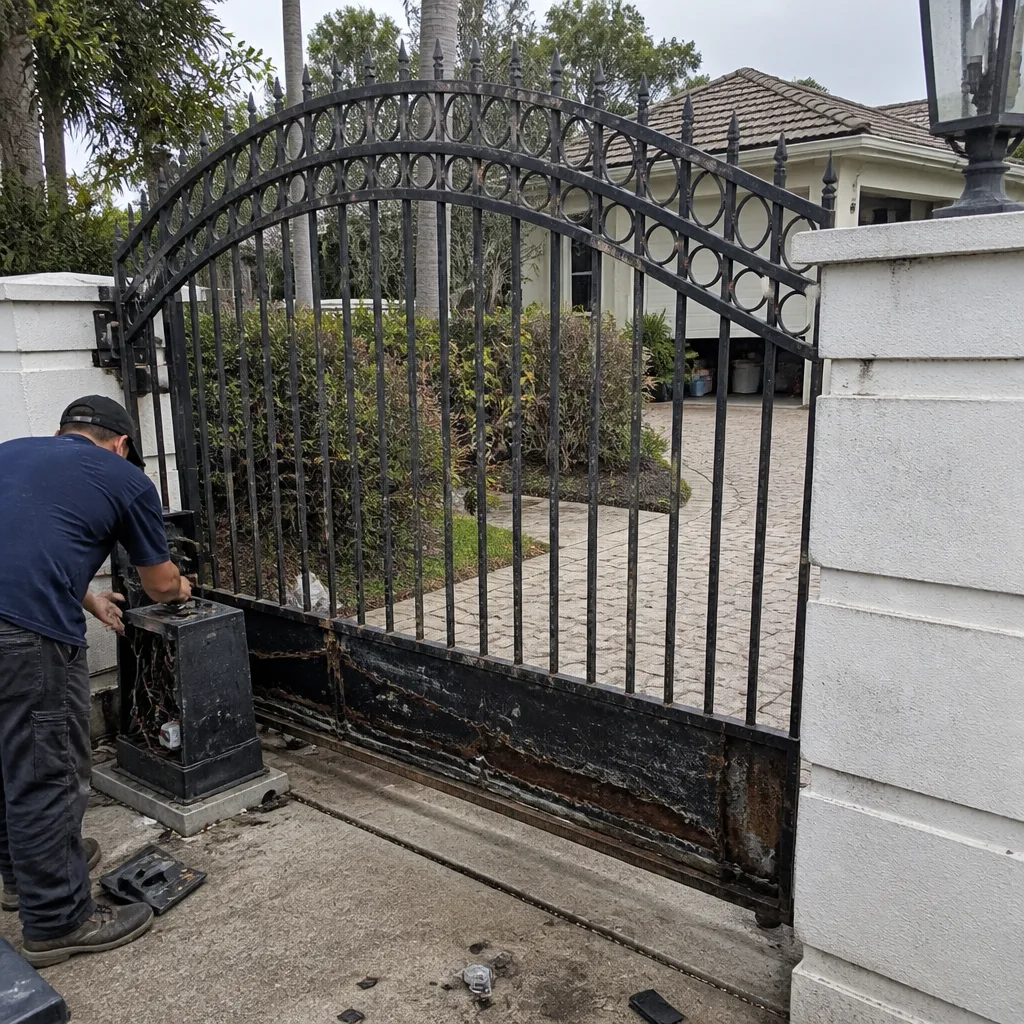 Before
 After
After Before
 After
After